
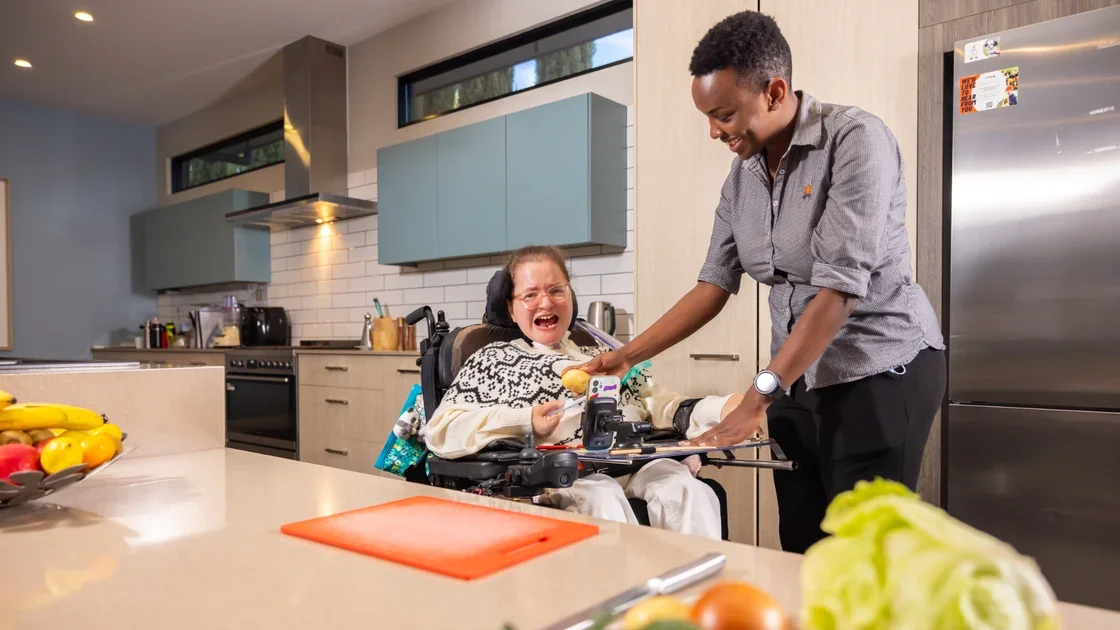
When support needs change, families often face a difficult question.
Can we keep life steady at home, or do we need to consider supported accommodation?
For many people, in home disability care provides a practical and sustainable way to receive the right level of support while remaining in familiar surroundings. We work with families who want clarity around their options, particularly when comparing in home care vs residential care.
There is no single right answer. What matters is understanding what each pathway offers.
Here are five reasons many families choose in home disability care as part of their long-term plan.
1. Familiar Surroundings Support Stability
Home carries routines that are already established.
The kitchen layout is known. The neighbourhood is familiar. For many people living with disabilities, this familiarity adds to their emotional stability and confidence.
With structured disability support at home, daily assistance fits around existing rhythms. Morning routines can stay consistent. Preferred activities can continue. Cultural or family traditions remain part of everyday life.
Over time, that consistency plays a meaningful role in maintaining independence with disability.
We develop individual support plans with continuity in mind, reducing unnecessary disruption while still addressing changing care needs.
Learn more about how we deliver structured support through our In Home Care services in Victoria and other locations.

2. Greater Choice and Control Over Daily Life
Independence does not disappear when support increases. It evolves.
With personalised disability support, daily schedules remain flexible. Support workers assist with tasks such as meal preparation, personal care, medication prompts or community outings, guided by the person’s goals.
Some people prefer early mornings. Others function better later in the day. Some want support focused on employment or study. Others prioritise social connection.
We align rosters and support hours to meet preferences wherever possible within NDIS guidelines.
This flexibility allows individuals and families to retain involvement in decisions about:
Daily routines
Visitors and social time
Cultural or religious practices
Household arrangements
If you are navigating NDIS funding or eligibility questions, our NDIS support page outlines how we guide families through each step.
3. Stronger Community Connection
Friendships, local clubs, places of worship, employment, volunteering or simply visiting a favourite cafe all contribute to identity and belonging.
Remaining at home often makes it easier to continue these connections. Through coordinated disability support at home, we help individuals plan transport, attend appointments, and engage in activities that reflect their interests.
We also provide dedicated Community Access support to encourage participation beyond the home. Our support workers can accompany individuals to social groups, recreational programs or community events.

4. Support That Adapts as Needs Change
can adapt to those changes, avoiding unnecessary disruptions.
If additional hours are required during recovery, we review the plan together. If support needs become more complex, we coordinate the right level of oversight and update the structure around daily care.
We operate within registered standards and regular audits, which means safety processes are always in place. Our steady framework allows support to evolve gradually, alongside the person and their family.
5. A Collaborative Approach to Planning
Planning support involves real decisions about funding, scheduling and long-term goals. We stay close to those conversations so you are not navigating them on your own.
When providing in home disability care, we work directly with you, your support coordinator and Allied Health professionals to keep the plan practical and current. We check in regularly, talk through what is working and adjust services where needed so daily life continues to run smoothly.
If you begin weighing in home care vs residential care, we walk through those details with you in plain terms. Here at ONCALL, you remain at the centre of every decision, with clear information and steady support as circumstances evolve.

Live Life Your Way With ONCALL
Choosing the right support pathway takes time.
Staying at home can provide continuity, autonomy and connection when structured correctly. It offers a way to receive practical assistance while keeping daily life recognisable and meaningful.
If you are considering in home disability care for yourself or a loved one, we are here to help you plan the next steps with clarity. Discuss your in home support needs with ONCALL.