
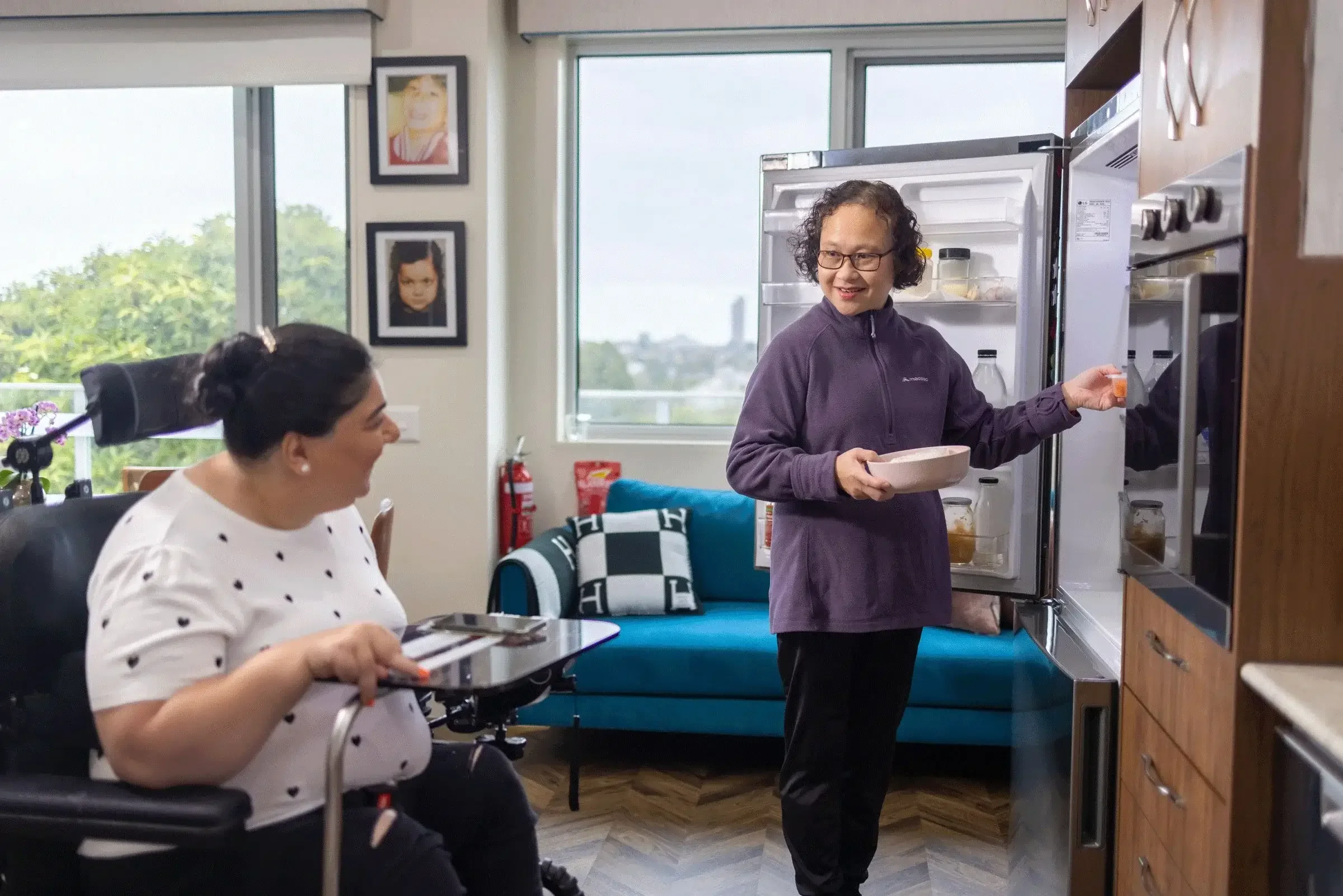
In-Home Respite Care QLD
Flexible in home respite care across Brisbane and regional Queensland, helping carers organise reliable support at home without disrupting daily routines already in place.

In-Home Respite Care in Queensland
We organise in-home respite care QLD-wide, including Brisbane and regional communities across Queensland, with support built around the routines, schedules, and level of assistance already in place at home.
Support can be arranged for:
Personal care and daily routines
Meal preparation, household assistance, and medication prompts
Overnight and weekend respite care
Community outings and appointments
Higher care and complex support needs
With ONCALL, you can organise anything from short 2-hour visits through to overnight and ongoing respite at home. Many respite services are funded through the NDIS under Core Supports (Assistance with Daily Life), depending on the participant’s plan and approved supports.

What Is In-Home Respite Care?
In-home respite care allows care to continue at home while carers step away for work, appointments, overnight breaks, travel, or ongoing weekly respite.
You can organise:
Short daytime visits
Overnight respite care
Weekend support
Temporary care after hospital visits
Ongoing respite throughout the week
Keeping respite at home also helps maintain routines already familiar to the person receiving care, including meals, medication schedules, mobility equipment, communication styles, and day-to-day habits.
NDIS In-Home Respite Care in Queensland
ONCALL supports self-managed, plan-managed, and NDIA-managed participants with flexible NDIS in-home respite care across Brisbane and regional Queensland.
We can organise respite around:
School and work schedules
Therapy appointments
Overnight routines
Existing support arrangements at home
As experienced NDIS respite care providers in Brisbane, we help organise respite that fits naturally into daily routines without overcomplicating the process. Our Queensland intake team can also assist with onboarding, service setup, and coordinating with existing care teams where needed.


Who We Support with In-Home Respite Care
disability support and higher care environments.
Care may include:
Daily personal care assistance
Overnight supervision and respite
Mobility and transfer support
Behavioural and cognitive assistance
Post-hospital recovery care
Help with community participation
Respite is a good option to organise for times when routines temporarily become harder to manage alone, including recovery periods, changes in care arrangements, work commitments, or increased overnight support needs.
Expertise in Complex and High-Care Needs
We provide in-home respite care for people living with higher support needs at home, working alongside existing care teams, support coordinators, nurses, and allied health providers to help routines stay steady during respite periods.
Our teams regularly support people living with:
Motor neurone disease
Parkinson’s disease
Huntington’s disease
Multiple sclerosis
Acquired brain injuries
Stroke recovery needs
Early onset dementia
Spinal cord injuries
Palliative and end-of-life care needs
Before respite begins, we take time to understand routines, equipment requirements, communication preferences, behavioural supports, and the level of assistance already involved at home.


Specialised Training and Clinical Oversight
Our support workers complete ongoing clinical training and follow established care plans already used at home. We organise respite care in the home for people requiring overnight supervision, mobility support, medication routines, and more complex daily assistance.
Training areas include:
Enteral feeding
Diabetes and insulin management
Tracheostomy and ventilator support
Complex wound care
Complex bowel management
Crisis prevention and intervention
Manual handling and mobility support
Our teams also follow escalation procedures, incident reporting processes, and emergency response protocols to help keep respite organised safely and consistently at home.
Benefits of Choosing In-Home Respite Care in Queensland
In-home respite care keeps routines, surroundings, and daily care arrangements more familiar while respite continues at home.
Compared with centre-based respite, respite care in the home can offer:
Familiar meals, routines, and surroundings
More flexibility around overnight or short-term care
Less disruption around communication and daily habits
Continued access to mobility aids and personal equipment
Support organised around existing routines at home
Greater continuity with regular support workers
Carers can also step away knowing routines, schedules, and day-to-day assistance remain organised at home.


Get Support with In-Home Respite Care in Queensland
We organise in-home respite care across Brisbane and regional Queensland for daytime respite, overnight care, weekend support, and ongoing disability assistance at home.
If you are arranging respite for the first time or looking to change providers, our team can help explain available options, organise onboarding, and walk through NDIS funding pathways clearly from the beginning.
Interested in ONCALL’s In Home Respite services? Make a referral today!
Fill out the form below or call the friendly team today.
VIC: 03 9896 2468
QLD: 07 3817 8700
Frequently Asked Questions
-
Yes. We provide in-home respite care QLD-wide, including Brisbane and a range of regional communities across Queensland. Contact our team to check local availability.
-
NDIS respite care Brisbane and QLD services are often funded through Core Supports depending on the goals and funding already included in the participant’s plan.
-
Our broader workforce coverage across Brisbane and regional Queensland allows us to organise replacement workers quickly if regular respite arrangements unexpectedly change.
-
Yes. You can organise overnight, weekend, and short-term respite care depending on the level of assistance required and worker availability.
-
We look at routines already in place, communication preferences, behavioural supports, mobility requirements, personality fit, and the type of assistance needed at home when organising ongoing respite care.